Written by Mike Hamilton, CCA & President of Turf Dietitian
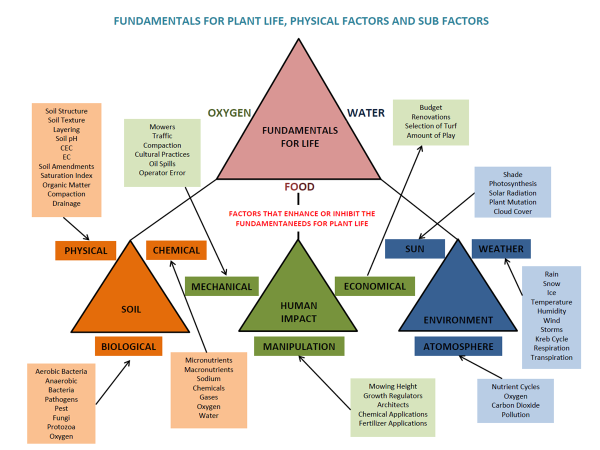
Not all of the challenges Superintendents face are soil related. Physical factors such as shade, poor water quality, lack of subsurface drainage, improper construction, steep contours, excess traffic, extreme weather, and pests can make growing healthy turf problematic even with perfect soil conditions.
The most important skill that all of the best Superintendents in the industry possess is the mastery and management of water, oxygen, and nutrients.
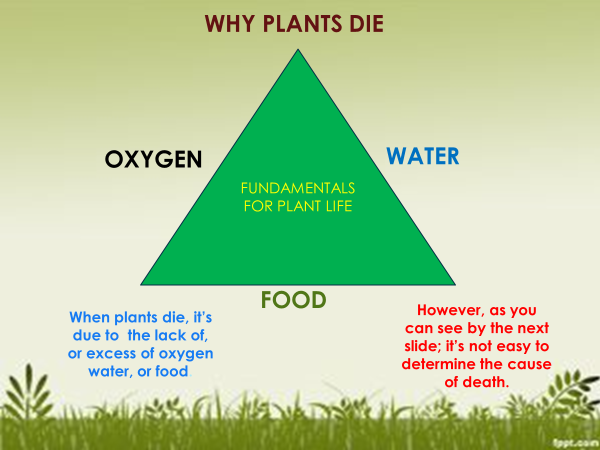
Yet the most skilled Superintendents in the industry will struggle with managing the basic principles of plant life due to physical, environmental, and financial factors. When I write reports, I tend to focus on those physical and environmental factors that Superintendents battle. When discussing physical and environmental factors, I’m not attempting to educate turf professionals because they are very aware of their negative impact on growing healthy turf. I write this report in hopes that it may inform members or staff that don’t have an understanding of agronomy.
Typically when a Superintendent struggles with the same turf areas year in and year out, it’s an indication that a physical condition obstructs the ability to grow healthy turf. Some common physical factors that make it demanding to grow healthy turf are:
- Excessive organic matter accumulation
- Soil layering
- Soil structure
- Poor quality irrigation water
- Improperly constructed greens
- Inefficient irrigation
- Shade from trees or structures
- Inadequate air movement
- Poor surface drainage
- Steep contours
- Improperly installed drainage systems
- Drainage system failures
- Excess traffic
- Extreme weather
- Pest
- Soil Reactions
Typically, one of the stressors mentioned above can make it challenging to grow healthy turf. Still, in many cases, a combination of factors adds to the situation’s complexity. As with the heavy accumulation of organic matter in greens, one physical factor can trigger a chain reaction that causes many other factors.
Numerous times the physical condition causing the turf demise originated during the construction phase of the green. That is why it is critical to check every layer of every green installed to ensure it meets specifications. One slight error can cause problems for the life of the green.
Initially, greens perform well because the porosity of the soil is optimum. As the green ages, the porosity of the soil naturally declines. Water pores replace air pores (oxygen holding) because of compaction, organic matter accumulation, and the depletion of aerobic bacteria. Upon reaching this threshold, the fitness of the green will worsen exponentially every year. Therefore, cultural practices must start as soon as the initial turf knits together. Maybe the most significant error I see in the industry is ignoring cultural practices for the first year. The general golfing public believes because greens are new, they require little attention. There could be nothing further from the truth.
There is nothing easy about growing manicured turf.
The incredible stress on plants maintained at a 1/8″ is enough to make growing turf demanding. Additionally, with each stress factor added to the equation, supporting plant health becomes progressively more challenging. At some point, we must address these stress factors on a golf course, or members will need to learn to accept less-than-perfect turf.
I typically see memberships in the industry that go through several Superintendents before finally admitting investments are needed to improve the growing environment. The best thing you can do not to be one of the victims is to solicit help from industry professionals to help convince memberships physical problems exist.
They say it takes a village to raise a child.
I say, “It takes an educated membership to raise a world-class golf course.”
