Written by Mike Hamilton, CCA & President of Turf Dietitian
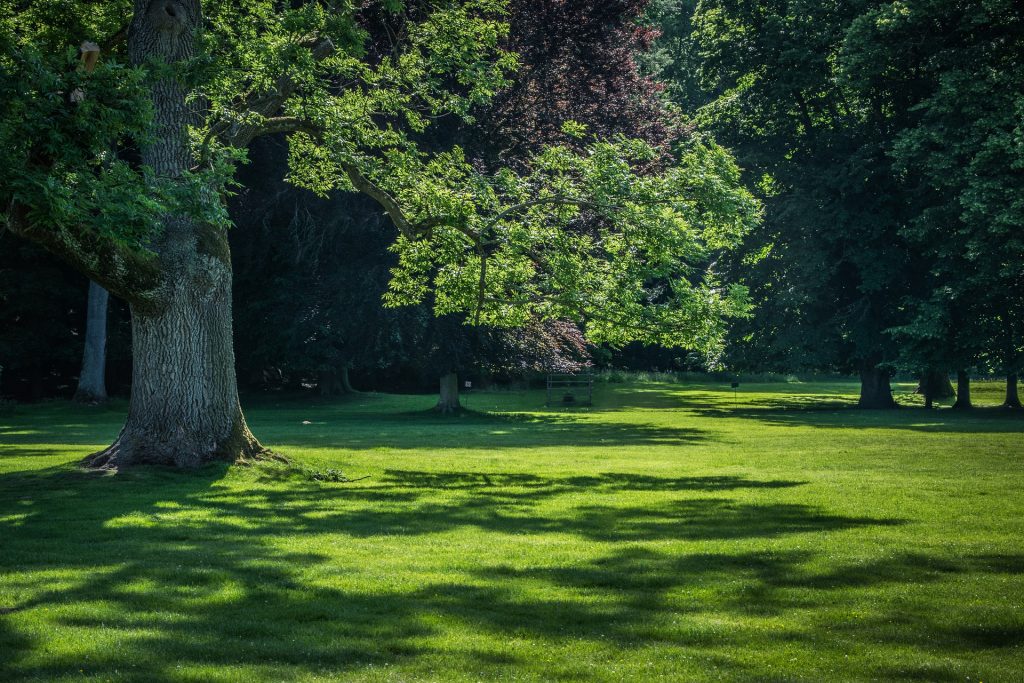
People love trees and think it is a sin to cut down healthy trees. After all, trees are beautiful, and many are older than the oldest human. Additionally, they benefit man by absorbing potentially harmful gasses, such as sulfur dioxide and carbon monoxide, from the air and releasing oxygen and carbon dioxide into the soil and atmosphere. But turfgrass is also beautiful when it’s healthy, plus it provides all the same benefits to humans that trees do. Unfortunately, turfgrass isn’t a shade-tolerant organism, and those big beautiful trees are killing the turfgrass you pay so much money to maintain. The reality is golf courses are not a park or forests. The essential plant on a golf course is turfgrass. Trees are lovely on a golf course, but not in highly demanded manicured turf areas.
Looking back at my experience, whenever a tree (or trees) needed removal, the task became a point of contention between golf supers and the people they serve. What’s required is gentle negotiation on both sides.
Both sides need to remember to be successful; there has to be a give and take. One solution I came up with was that for every tree removed; we planted three in a more appropriate location. Another solution I offered was to install attractive gardens, native plant beds, or less disruptive trees as a backdrop. You will require a plan that will make the majority of the people happy.
However, the trees must come down if lousy turf is not acceptable.
During the summer, the days are long enough, and the sun is high enough for the turf to tolerate some shade. But, this may be the best time to trim or remove older trees to provide more sunlight to the affected turf.
Yet even though turf may appear healthy when shaded in the summer, the necessary metabolic functions that affect the plant’s immune system are hindered. However, in the winter, the total amount of direct sunlight is reduced enough to cause turf to be more susceptible to damage from heavy cart traffic, cold, wet weather, and pests.
The bottom line is turfgrass and trees must coexist on most golf courses for many reasons.
Trees create challenging obstacles, frame holes, add depth perception, plus add natural beauty. A wide-open golf course with no trees would be less complicated and unattractive unless the golf courses were designed to be links courses.
Give trees and turf ample space to grow, and they get along just fine. Put them together, competing for the same resources, and the bigger one will dominate.
Plant growth is a highly complex and ordered process. Plant growth requires energy, and the source of that energy is the sun. Energy is necessary for thousands of plant processes, such as producing and utilizing food, cell division or growth, respiration, transpiration, defense mechanisms, reproduction, etc. Light is the mechanism for energy transfer from the sun to the plant. Turfgrass plants receive the sun’s energy via tiny particles called photons. The plant converts the radiant energy it receives into chemical energy through photosynthesis.
Turfgrass is unique in the respect that the quality of light is equally important as the duration of light.
University research shows the minimum suggested sun requirements for ultra-dwarf bermudagrass under low traffic stress is at least 5 hours of morning light and 5 hours of afternoon sunlight.
So why are researchers so specific about the requirements of morning and afternoon sunlight? The color and intensity of the light spectrum change from sunrise to sunset. Each color wavelength coincides with different specific metabolic functions within the plant. At dawn, the dominant spectrum of light is blue. The ultimate production of chlorophyll in turfgrass plants occurs during the period of blue light. Also, morning sunlight helps get dew and moisture off the surface, which helps in disease management.
The dominant spectrum of light is red during the high sun from late morning through mid-afternoon. The majority of plant growth occurs during the period of red light. Afternoon light also favors photosynthesis. The dominant spectrum of light is green during the period in which the sun is setting. During the green light period, most energy will store in the carbohydrate reserves, and respiration occurs.
Because every metabolic function in the plant is a factor in plant health and every metabolic process relies on a different spectrum of light for optimization, turfgrass needs to receive direct sunlight during all periods of the day.
It’s also important to understand that different shade sources affect light quality differently in plant growth. Shade from cloud cover is spectrum-neutral, filtering out all light wavelengthsght equally. Shadows from trees or structures are not spectrum-neutral and change the ratio of blue light to red light, which can affect plant growth. When the natural balance between blue light and red light alters due to shade from trees or structures, it causes one metabolic function of the plant to be overstimulated while another metabolic process is compromised. The imbalance of light waves causes an adverse chain reaction within the plant, compromising plant health.
Increasing available sunlight or an increase in leaf area enables the turfgrass to increase carbohydrate synthesis and storage processes critical for withstanding the many stresses inherent to putting green turf. Therefore, to relieve shade stress, Superintendents usually raise mowing heights or thin or remove trees. However, these remedies are often resisted by those who wish to maintain the natural setting, increase speed and maximize playability on the greens.
University studies show that when traffic is applied, the shaded plots deteriorate more rapidly than non-traffic areas. Thus, golf courses with high play or limited cupping areas where traffic concentrates in areas of a putting green receiving shade would exhibit more significant injury and need better sunlight conditions.
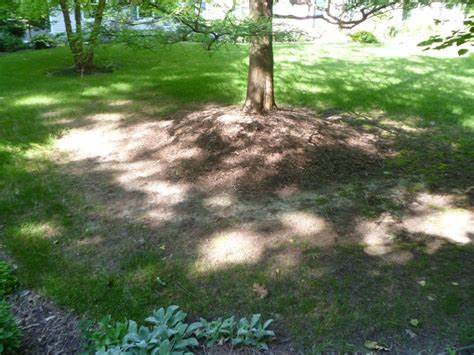
Turf lacking the necessary amount of light needed to sustain healthy growth can only improve by effectively removing trees that cause shade.
The same trees which cause shade can also block airflow. Airflow is essential because it helps to cool turf in the summer, and it helps to dry the surface from due or excessive precipitation.
The shade issue may or may not be a situation you can control, depending on your membership’s willingness to cut trees down or environmental restrictions due to conservation areas. If cutting trees requires persuasion and you have been unable to persuade the membership, you may need to solicit an outside company to perform a tree and shade analysis. Companies such as Arbor Com have helped hundreds of Superintendents to gather the necessary data to justify tree removal.
A much less scientific approach but an equally revealing one is photographing the shade pattern on the affected greens every hour from sun-up to sundown. If you choose this approach, I suggest you perform this task on or near December 21st since that is the shortest day of the year (the time between sunrise and sunset is 10 hours and 27 minutes).
